posted on January 27, 2015 by
Meaning & Purpose
Many of my clients have struggled with deep questions of meaning and purpose. Do you have room in your life to ask what it all means? Or why you are here? Do others give you a real chance to voice these questions? Does the world respond to your desire for a deep purpose in life? Does the culture somehow tell you it’s not okay to ask these questions? Do you feel isolated? Despairing? Confused?
These questions can hit you at any stage of life. Midlife definitely is one. We look back on what we’ve accomplished and not accomplished, our work, family, and relationships, and turn to the future. We may feel uncertain, as well as excited at the potential for transformation.
As we move past midlife into retirement years, profound changes that happen in relationships, work, and sometimes health can bring feelings of loss and crisis. Friends and loved ones begin to pass on, things that once seemed important don’t anymore, and life can undergo a radical reorientation.
The late teen and college years often bring up questions of meaning and purpose. How will we find our place in the world, and what will our lives mean? This time of life sometimes brings serious crisis. Our hopes for a good life and a better world can feel shaky.
The mid-20s to the early-30s can bring a quarter-life crisis. It’s a time of launching into the world, leaving the nests of home, family, and college. First jobs can be fun and stimulating, and also can be exhausting and difficult. Is this really what my life is going to be? we may ask. Deep relationships might be hard to come by, or hard to sustain.
Questioning life’s meaning and purpose is a difficult process. It benefits from a trusting relationship with a therapist who gets it—someone who doesn’t dismiss your concerns or try to fix them in five easy steps. Someone who listens and responds from a deep place.
If you’re looking for a therapist who will truly work with you on these concerns, I may be a good match for you. I will follow the threads of your questions and help the answers come in an organic process. You can learn to let the questions live in you and bring you alive in ways you couldn’t have predicted.
posted on December 2, 2014 by
Divorce

Divorce can act as a rite of passage—an initiation into a new life.
By describing divorce in this way, I am not saying that it is a good or a bad event. But it does happen, and it happens frequently, and finding meaning and perspective during the process of divorce is crucial to healing and transformation.
Many of my clients have felt stuck in a marriage or committed, long-term relationship. On one end of the spectrum, partners may grow in different directions and struggle with feeling limited by the relationship. Other marriages face more damaging patterns. In these relationships, partners unconsciously hurt each other. Often these damaging patterns stem from early life relationships with parents and get replayed with the partner.
Couples therapy can clarify what’s been wrong and lead to renewed connection. Sometimes this renewed connection allows for a relationship that works well for both partners. Other times it becomes clear that the couple will separate.
If either or both partners have felt stuck and miserable for a long time, separating can release a great burst of energy that was bound up in the difficulties of maintaining an unhappy state together.
Whether splitting up brings this release or not, it still hurts. The life the couple dreamed of having together comes to a stop. Profound feelings of loss and grief can last for some time, and when one or both partners didn’t really want the divorce, these feelings can go on even longer and cause more suffering.
Some individuals will find themselves plunged into a depression during or after divorce. The question then becomes whether this dark time is barren of new life, or instead can become a kind of pregnant darkness that initiates the person into a fuller experience of his or her life. This is one area where therapy is especially helpful—to help midwife the client’s newly emerging life and provide support during a hard time.
After a divorce, my clients report a whole range of feelings, all of which are important to feel and work through in therapy. Feelings of grief, uncertainty, excitement, fear, loneliness, new potential, anxiety around finances, and many other feelings are part of the mix.
Questions of self-identity and the future often come up. Who am I apart from this other person and my relationship with them? Will I find another partner? Do I even want a relationship? Will I replay my own old patterns? How will I parent my kids (if there are children from the marriage)?
Divorce is a rite of passage that often comes during the midlife years from about age 35 through age 60. For so many, these years are a time of deep changes in many areas of life—relationships, parenting, health, and career. Clients find themselves turning inward, searching for answers, exploring complex feelings, redefining self-identity, and wondering about the future. This is an excellent time to find a therapist who can help you navigate these waters and embrace the new life that is waiting for you.
posted on November 25, 2014 by
Intimate Relationships
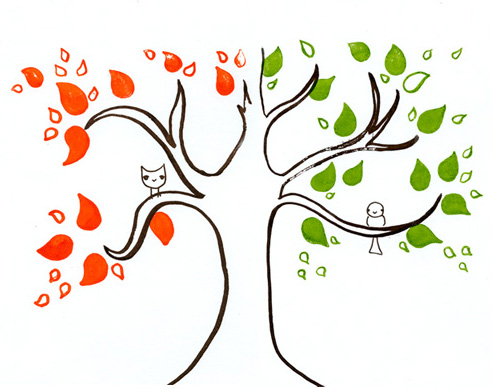
Name me one issue that causes more people more confusion and pain—and more hope and joy—than intimate relationships.
I don’t generally work with couples in my practice. I tend to work with individuals, but we often talk about hopes, dreams, difficulties, and conflicts in that person’s intimate relationships.
This work opens up awareness of the underlying patterns that may plague a client’s relationships. It takes some time to sort this material out. For example, the client’s relationship with mother or father while growing up usually shows up in this process. The way we relate to an intimate partner has a lot to do with how we related to our first loves—our parents!
Feeling judged, disappointed, neglected, rejected, or abandoned by your partner? Does that feel familiar? It could be that you’ve ended up with someone who triggers old feelings that mom or dad brought up for you. We all tend to repeat the past unconsciously.
Do you continually seek the perfect soul mate to the point that you give up on relationships without giving them a real chance? It could be that you are unknowingly trying to re-create a perfect relationship that you had—or didn’t have but longed to have—with mom or dad.
Did you experience trauma of some kind when you were a child or adolescent? Do you find that those old hurts intrude on your current relationships? You’re not alone if you do.
Of course, it’s not this simple at all. It’s complicated on many levels, but I’m offering examples of common issues.
We seem wired to seek a special partner in life, and we pour a lot of longing and expectation into finding this mate. In fact, take a look around, and you’ll see that there’s a whole industry of self-help, special therapies, couples’ counseling methods, and workshops that promise to fix this very human conflict around achieving fulfillment in an intimate relationship.
Have you ever noticed how often (I’m not saying always) the hoped-for fulfillment seems to exist on the other side of a gulf we can’t seem to cross? It’s as though we stand over here on this side of the gulf, with longings for what we believe must exist over there, on the other side.
We cling to an idea of how a relationship is supposed to be, and we don’t live in the actual reality, right here, right now, of our relationship. Real relationships are messy—full of contradictions, and include happiness and frustration, aliveness and boredom, health and illness, fulfillment and disappointment, and togetherness and separation.
When I work with a client, our conversations often spend at least some time on questions of how to be in an intimate relationship that challenges, stimulates, and meets basic desires. Sorting this all through helps the client discover what he or she wants and doesn’t want, how to avoid sabotaging good relationships, and how to avoid getting stuck in bad ones. It also helps the client discover how to ground a healthy relationship with another person in a healthy relationship with his or her own self.
posted on November 11, 2014 by
Spiritual Struggles

Struggles with spirituality or religion often cause significant emotional and psychological distress. I’ve worked with many clients who feel profoundly troubled by questions of spirit. However you define these questions, whether in a Buddhist, Christian, Jewish, pagan, atheist, agnostic, or any way, something about human nature wants to ask about the nature of soul, spirit, God, or other realities that we know very little about but find ourselves deeply curious to discover.
While certain individuals don’t seem so oriented to spiritual concerns, at least until trauma, illness, or the prospect of death comes up in their lives, others were either born wondering about these concerns or were brought up in families or religious communities that put spiritual questions at the forefront of consciousness.
So why and how do spiritual concerns become struggles that can cause a person to suffer emotionally? This is a complex question, but let’s consider a few of the reasons. We live in a culture dominated by the success of the natural sciences and an awareness of the historical origins of religions. Both of these tend to make us uncertain about the “old time religion” that we may have grown up with. What seemed like clear and certain knowledge of who God is and how to know God, for example, may crumble when a person starts studying the world through the lens of natural science.
Suddenly questions come up, such as whether what we call God might be the result of certain structures in the human brain that create an image of an ultimate reality. Or we start seeing that the holy scriptures of our religion contain contradictory information if read in a very literal way, and this shakes our faith. We don’t know what to believe anymore. Or the spiritual leaders we had trusted end up betraying our trust in some way, and we are left in a crisis of faith. Or it dawns on us that something we took for granted, for example a moral teaching on sexuality, has actually caused a great deal of unnecessary suffering.
Pushed further, a person of faith may begin to doubt that the God they trusted is really so trustworthy after all. I remember when I was studying theology in graduate school in my 20s, we had a professor who taught a course on theology after the holocaust. How are we to make sense of God, or are we, in a world where horrors beyond our imagining take place? This is an intensified form of what used to be called “the problem of evil.”
These days, especially in a town like Portland, many people explore spirituality outside of the major world religions. Westernized forms of various eastern traditions, such as meditation and yoga practices attract many seekers. Yet my clients sometimes struggle in these communities too. They may constantly seek for the true path that they hope will relieve them of life-long emotional struggles, and the constant seeking itself becomes a problem. Or they may beat themselves up for falling short of some imagined, perfectionistic standard of true meditation, for instance.
The many gurus that have sprouted up sometimes cause a lot of harm to their devotees as well. We would all like to idealize someone, a powerful figure who promises to deliver us from our problems. And it may work for awhile, but often the guru or teacher later is exposed as a mere human being, and is sometimes even abusive in the realms of money, power, or sex, and followers end up disillusioned and despairing.
More “pop” versions of New Age spirituality tend to commercialize the spirit. Every new method has a trademark, and turns into a profit-making system. They may promise to help you transcend the anxieties and struggles of living in the world. They may fantasize about escaping the limitations that we all suffer. Illness becomes something you should be able to visualize your way out of, and when you can’t cure yourself, you feel doubly guilty for somehow not being conscious enough, and you end up in a depression.
I studied philosophy and religion before I got interested in clinical psychology, and so I’m quite familiar with all of these questions and searchings, both from an intellectual standpoint, and from my own personal experience wondering and seeking answers to the questions that we all find ourselves asking about the nature of things.
I favor an open attitude to these questions. Wondering and questioning, in my view, are far more interesting than pretending absolute knowledge, or thinking we can pin God or Reality or the Cosmos down in a formula of doctrines. The ancient Greek philosopher Aristotle said that by nature we desire to know, but that this desire begins in wonder, and every question we answer leads to further questions! By shifting our focus from attaining certainty to lingering in our wondering and curiosity, we enter a far richer landscape, and one where we don’t get so caught in impossible dilemmas that can quite literally drive us mad.
True faith opens us to an infinite horizon that will never cease to stimulate our wondering nature and lead to further and further questioning. For me, living in this space is the essence of spiritual transformation.
posted on November 4, 2014 by
Neglect

When we talk about the hurts that bring people to therapy, it’s easy to downplay the hurt that comes from childhood neglect. It’s much more obvious to point to dramatic trauma as the source of a person’s emotional suffering. If you were abused emotionally, physically, or sexually when you were young, then we have a clear sense of what caused the harm that continues to trouble you as an adult.
But neglect doesn’t seem so dramatic from the outside, unless you’ve experienced it yourself and know from your own experience how bad it felt. Each child needs consistent, loving attention over many years of developing in order to enjoy a healthy sense of self and a healthy emotional life. If your parents and other adults or siblings and peers ignored you, abandoned you emotionally, loved you only if you fit their idea of who you should be, or cut you off from human connection in some way, then you know that being neglected hurts deeply.
You may have felt isolated much of the time, as though no one was there to see who you were, to value what you said, felt, and thought, to give you physical affection, or even to let you know that you existed and mattered to them. Sometimes children of neglect had parents who were narcissistically self-absorbed. Such parents prefer to focus only on themselves, their work, their relationships, their obsessions, and children become an afterthought. Other parents become absorbed in addictions, mental health problems, or physical health problems.
On the other hand, maybe you got some basic attention in your childhood, but it was very conditional. If you didn’t measure up to some standard, then you risked losing the love of your parents. You had to believe, or act, or be a certain way, or you might get tossed out of the circle of the family. In this case, part of you got attention, but other parts of you got neglected or rejected as bad. This can create a feeling of being divided inside—like parts of you got lost along the way, left behind, all alone.
What therapy does in these cases is to create an atmosphere of trust and openness where all of you is welcomed, seen, nourished, and encouraged to develop in ways that enhance your life. Instead of feeling left behind and isolated, your therapist gets to know the you that suffered neglect. I’ve seen in my practice how a person can then heal and grow and feel truly known for who they are. This can have dramatic effects throughout the client’s life as the therapy moves along.
posted on October 28, 2014 by
Trauma
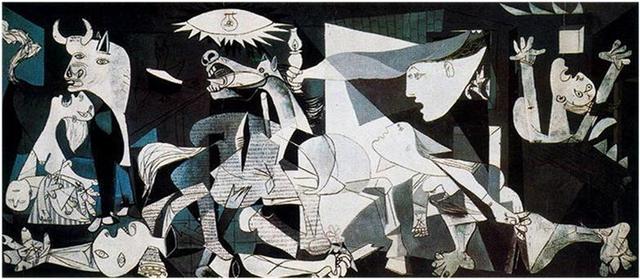
To be alive is to be vulnerable to hurt, and so trauma comes in many forms, at all stages of life. The world is full and rich, but it’s not entirely safe, and people who have suffered serious trauma know this very well. Some forms of serious and damaging trauma include: sexual abuse at any age, chronic neglect when you were a kid, getting beat up by parents, strangers, or significant others, living through a parent’s mental illness when you were little, warfare and violence, and even more subtle but very damaging experiences like being shamed by parents, religious leaders, teachers, etc.
We now understand that the human psyche responds to trauma in a self-protecting way. It’s rather ingenious, actually. Your spontaneous, open, un-defended self sees the trauma coming, and goes into hiding. In a sense, your true self “goes away,” and various false selves take over, so that you can survive what is happening to you.
On the one hand, this going away saves you from even worse hurt. On the other hand, at a certain point, it simply doesn’t work anymore. It limits you. You may find yourself sad, spaced out, disconnected from yourself and others, and longing for that true self you lost because of your trauma. You may wonder, who was I, before those things happened to me? Can I ever get in touch with the person I was? Will I ever feel truly alive again?
It’s definitely possible to reconnect with yourself, even after serious trauma and long years of separation from your true self. I’ve seen it happen. It’s not necessarily quick and easy, and that’s why a solid relationship with a therapist over a period of consistent therapy is so important.
You probably won’t feel too keen on revealing your true self at first. Your natural expectation is that you’ll just get hurt again. It’s hard to trust, and you may even fight against a healing therapy relationship. A sensitive therapist will realize this, and give you all the time you need to venture back into life. That therapist will notice when to encourage you to come out of hiding, and when to leave you alone and let you find your way in your own timing.
The way out of the effects of trauma is challenging, but possible, and you’re not alone. I would love to talk with you about your experience and hopes for therapy.
posted on October 21, 2014 by
Anxiety

What psychiatrists and psychologists call “anxiety disorders” actually include a large number of very human experiences. We all have to cope with fear and worry. Anxiety is simply part of the human condition. But when anxiety takes over and our usual ways to cope with it no longer work, then it makes sense to say that something is wrong, and that you need help working through the problem.
Panic is one form of anxiety that you may be experiencing. Here the heart may race and pound out of your chest, you may feel unable to breath, think you’re about to die, and become utterly desperate, gasping for relief. The world is ending, so it seems. Terror. Then the panic usually passes after a time, and your body resets itself, while a fear lingers that this dreadful thing may happen again. Usually there is some trigger—anything from a walk through a “big-box” store to encountering certain difficult people to remembering suddenly a traumatic experience to facing a situation that feels impossible.
Some people find that they feel anxious almost all the time. You may feel constantly worried. Something as common as driving down the street brings fear. What if I hit a pedestrian? What if another car smashes into mine? It’s like you’re always expecting that something really bad is going to happen. You don’t know what it will be, but it’s out there, and it’s waiting to get you.
Others find that social situations make them anxious. Going to a party, or a meeting, or to visit friends and family stimulates awful fear. The body may express this fear with palpitations, fidgeting, crawling out of your skin, and the mind starts fantasizing about conversations going wrong, feeling shamed, or whatever your particular fear might be.
People who have experienced trauma in their lives usually struggle with anxiety at some level. Trauma is an intrusion on your sense of safety in your own body, among other things. The underlying feeling of walking around in the world is, “It’s not safe to be here.” You might even flash back sometimes to images and sensations of your trauma. You might find yourself spacing out—a natural way to protect yourself emotionally against what happened.
Different therapists will approach anxiety in different ways. A good therapist will even approach anxiety differently with each client, because everyone has a unique history and nature. What matters most is a solid, trusting relationship with your therapist. Anxiety tends to make you feel cut off from others and the world. Finding a therapist who will go right into these scary states of mind with you, stay with you in them, and not abandon you to them is crucial.
Like all psychological distress, anxiety is complex. It’s usually not any one thing that can be quickly fixed with the right pill or the right therapeutic trick or self-help book. Once you’ve struggled with anxiety for a long time, it has become part of you, and you need someone very skilled to help you through and out of its grip. The life you hope for is on the other side.
posted on October 13, 2014 by
Depression

Everybody feels down sometimes. Life seems dismal, boring, stuck, irritating. But what if that down feeling comes along and never lets you go? What if you go from feeling bummed out to feeling deep despair? What if your hopelessness gets into your body, and you can barely eat, or sleep, or force yourself to get the basic tasks of your life done?
Then you’ve in a depression. To be de-pressed is to feel like some dark force is pushing you down. This can range from moderate but disturbing forms of depression, to debilitating forms where you really can’t function at all and may struggle with thoughts of suicide.
In more severe depressions, you may sense that no one understands what it’s really like. How do you explain to someone, even someone who loves you and wants to help, what it feels like to have your psychological skin torn off so that every thought, every sensation, every little feeling is unbearable? It’s one of those things that you have to experience to understand.
Less catastrophic depressions can be very destructive too. They may not completely take you down, but they can go on and on, chronic, and slowly take away your enjoyment of life and your ability to take hold of your dreams and make them real. Relationships, work, and play become drained of the energy they used to have.
I realize that this is pretty dark stuff—not so easy to think about. However, people who are suffering these states of mind feel terribly isolated. Often no one wants to hear what it’s really like, or simply can’t understand. So I’m choosing to speak these things out loud, for the sake of anyone reading who might be suffering badly, and for potential therapy clients who are looking for someone who gets it.
If you go to your doctor and explain your depression, you’re likely to walk away with an Rx for anti-depressant medication. These can be helpful, even life-saving. But without therapy, the underlying problems in the person’s life may never get addressed. The biological side of depression is real, but it’s more complicated than “a chemical imbalance.” The truth is, we don’t fully understand the biology of serious problems with mood. We have a few ideas, and a few medicines that sometimes work.
You don’t usually get badly depressed unless something is really wrong. Your psyche is responding to a real crisis when it goes into a depression. It could be any number of problems, including unhappy work situations, relationship problems, childhood or more recent trauma, neglect early in your life, spiritual crisis, chronic stress, and the list goes on. Life presents lots of difficulties, and you may need a good therapist to begin to sort out these complex issues.
I believe that a depression can actually lead somewhere. The symptoms of depression can become signposts along a path to deep change. Taking this perspective—that depression can be meaningful—helps relieve the pain of these states of mind. If this terrible experience means something, and maybe is even going somewhere important, then it becomes easier to get through.
I hope what I’ve written helps a few people who are suffering. Consider all your options, including therapy, and please contact me if I can be of help.
posted on March 31, 2014 by
Jung’s Memories Dreams Reflections 13

“Unfortunately, the mythic side of man is given short shrift nowadays. He can no longer create fables. As a result, a great deal escapes him; it is important and salutory to speak also of incomprehensible things.” -C.G. Jung, Memories, Dreams, Reflections, p. 331.
There’s far more weight to this quote than first meets the eye. To cut right to heart of it, we no longer speak of what we cannot comprehend with our minds–the “incomprehensible.” Think of all the important things that this excludes. It excludes the divine, the soul, the origin of the cosmos, the experience of love, the archetypes, death and the hereafter… shall I go on? Even the great philosopher Plato blended mythologizing into his quest to understand. He created philosophical myths as approaches to what lies beyond our limited scope. Jung isn’t anti-rational. He’s simply saying that so much of ultimate importance lies beyond reason’s ability to understand. Modern human beings live within a closed horizon of our own undoing. Part of the continued appeal of Jung’s work consists in his return to the psychological experiences of the individual–the myth-making capacity of dreams and the storytelling of our waking fantasies. We have not evolved out of our need to mythologize as some have suggested. We are only hamstrung for the moment, still top-heavy with Enlightenment rationalism, human rationality as the measure of reality, the ego’s revolt against reality as it is rather than as we’d like it to be. So… keep dreaming and imagining! When you do, you’re exercising healthy rebellion against the pathology of our age and making a space in which the gods may return.
posted on February 26, 2014 by
Jung’s Memories Dreams Reflections 12
“A man who has not passed through the inferno of his passions has never overcome them. They then dwell in the house next door, and at any moment a flame may dart out and set fire to his own house. Whenever we give up, leave behind, and forget too much, there is always the danger that the things we have neglected will return with added force.” -C.G. Jung, Memories, Dreams, Reflections, p. 307.
This is a common theme in Jung–the return of the neglected with added force. He even has a fancy name for it, enantiodromia. The quote above occurs in a section where Jung is discussing his travels to India and his reactions and reflections to Indian philosophy and religion. The Christian, he says earlier, demands good from himself and rejects evil, while the Indian strives to experience his nature as it exists outside of good and evil. It seems to me that Jung finds something to argue with in both these perspectives. Cast out evil entirely, and it is liable to return with even greater demonic force. Cast out passionate engagement in the moral struggle of good and evil, and the passions are liable to return and burn the house down. I like this skepticism about absolute standpoints, because it seems to reflect reality. We’ve all known the morally perfect person who requires those around him to carry his incredible darkness. We’ve all known the person who seems to exist beyond the passions but secretly harbors perverse passions or collects troubled companions on which to project his disavowed humanity.


